Hanging a door: hinges, latches and what a doorset includes
The most common reason a door order goes wrong is not the door. It is that the leaf arrives on its own and the job stops, because nobody costed the hinges, the latch, the handles or the strike plate. Here is the full list, once.
Last updated
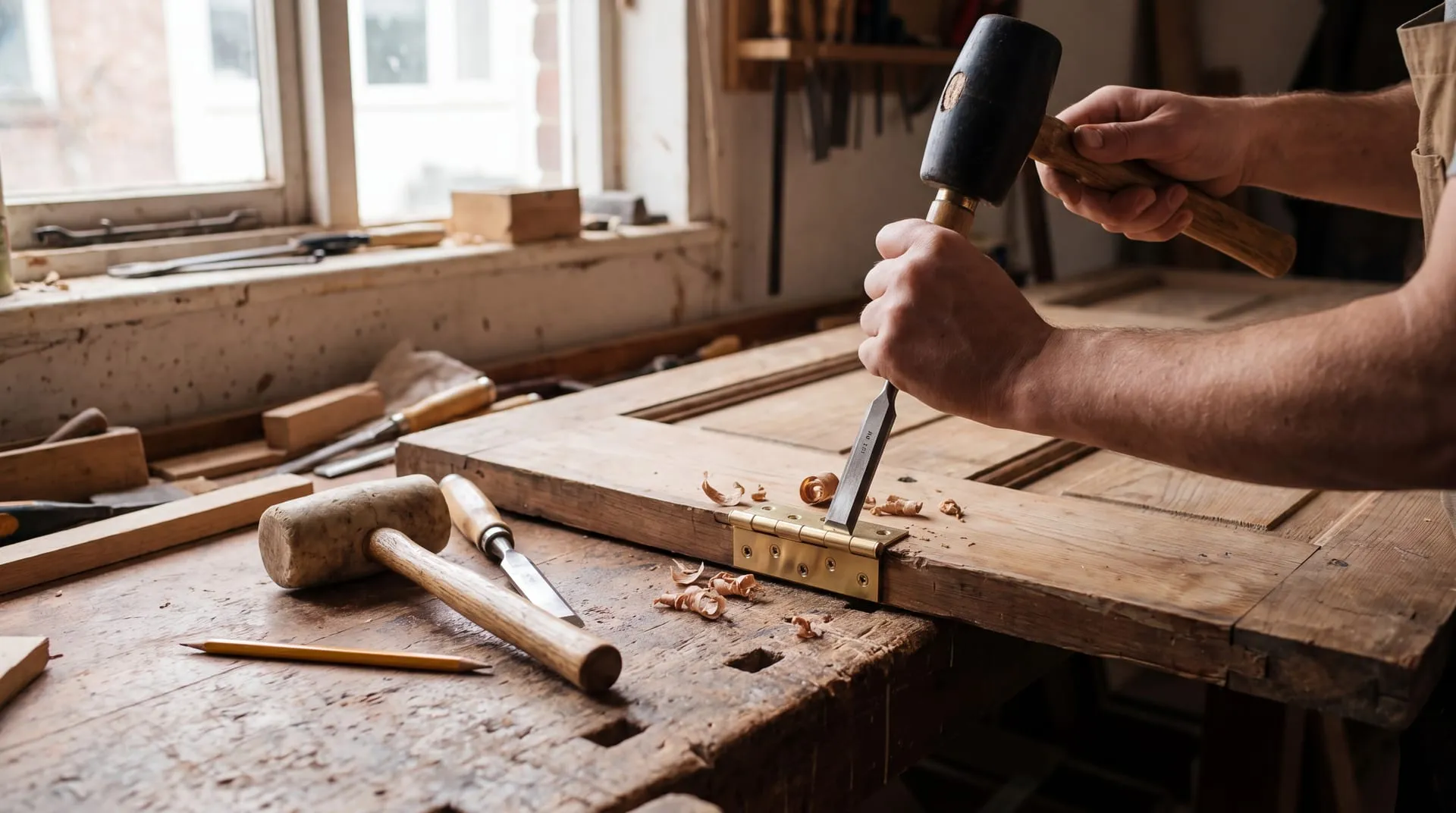 AI illustration
What do I need to hang an internal door?
A door leaf on its own is not a working door. You also need hinges, a latch, a handle set, and something for the door to close against. A doorset bundles the leaf with its frame or lining, hinges and latch already fitted, so the fitting work is largely done.
What does a door need besides the leaf?
| Part | What it does | What to check |
|---|---|---|
| Hinges | Carry the leaf and let it swing | Size, number, and whether they suit the door weight. |
| Latch | Holds the door shut and releases on the handle | The backset — how far the latch sits back from the door edge — must match where the handle needs to be. |
| Strike plate and keep | The metal plate on the lining the latch engages | Normally supplied with the latch. Check it is in the pack. |
| Handles and spindle | Operate the latch | The spindle must be long enough for the door thickness, which is why thickness matters when ordering. |
| Doorstop | What the door closes against | Planted onto a lining; already machined into a rebated frame. |
| Hinge and latch fixings | Screws suited to the leaf and lining | Heavy leaves have specified fixings — follow the instructions. |
How many hinges does a door need?
Two is normal for a light hollow-core internal door. Three is normal for anything heavy: solid timber, engineered doors, glazed doors and external doors. The third hinge sits near the top and stops the leaf bowing away from the frame over time, which is what causes a door to start catching a year after it was hung perfectly.
Butt hinges come in a small number of standard sizes, commonly quoted in inches and millimetres together, and the size needed follows the weight and thickness of the leaf. A heavier leaf on undersized hinges will drop.
What is a backset, and why does it matter?
The backset is the distance from the edge of the door to the centre of the spindle, which is where the handle sits. Latches come in a couple of standard lengths and the backset follows from that. It matters for two reasons: a short backset puts the handle close to the edge, which can make it awkward against a deep architrave; and a long backset on a narrow door can put the mortice into the wrong part of the stile.
On a glazed or panelled door there is a third constraint — the latch has to land in solid timber, not in a panel or a glazing bead. Check the door's stile widths before choosing the latch.
What is a doorset, and is it worth it?
A doorset is the door supplied with its frame or lining as a complete, matched unit — hinges hung, latch morticed, strike plate fitted, stop in place, and usually pre-finished. It arrives as an assembly and goes into the structural opening in one operation.
| Doorset | Loose leaf and lining | |
|---|---|---|
| Fitting time | Short — the joinery is done | Longer — hinges and latch cut on site |
| Skill needed | Lower | Higher, particularly for a clean hinge recess |
| Cost of the parts | Higher up front | Lower up front, before fitting labour |
| Flexibility on site | Low. The opening has to suit the doorset | High. Everything can be adjusted as you go |
The honest summary: doorsets are worth it where fitting time is expensive, where consistency across a lot of openings matters, or where a heavy leaf means the frame has to be right. For a single door in an old opening that needs scribing anyway, a loose leaf gives you more room to work.
What order should the work go in?
- Let the door acclimatise flat in the room it will hang in, before any cutting.
- Fit and square the lining or frame, if it is being replaced.
- Trim the leaf to fit, within the stated allowance, then seal every cut edge.
- Cut the hinge recesses and hang the leaf.
- Fit the latch and strike plate, then the handles.
- Plant the doorstop against the door as it actually hangs, not to a measurement.
- Finish the door, if it was not pre-finished, on all six faces.
Common questions
Do doors come with hinges and handles?
Usually not. A door leaf is normally supplied on its own, and hinges, latch, strike plate and handles are bought separately. Doorsets are the exception: they come with the frame or lining, hinges and latch already fitted.
How many hinges do I need on an internal door?
Two for a light hollow-core door and three for anything heavy, including solid timber, engineered, glazed and external doors. The third hinge sits near the top and stops the leaf bowing away from the frame over time.
What is a doorset?
A door supplied with its frame or lining as a matched, pre-assembled unit, with the hinges hung, the latch morticed and the stop fitted. It goes into the structural opening in one operation instead of being built up on site.
What size spindle do I need for a door handle?
It follows the door thickness plus the handle roses on both faces. This is why door thickness matters when you order: a spindle sized for a 35mm door will be too short for a 44mm external door.
Can I hang a door on my own?
A hollow-core internal door, yes. A solid oak or external door is heavy enough that two people and a pair of door wedges make the difference between a clean job and a damaged leaf.
Ready to order?
Every door lists its sizes in both imperial and metric, so you can check yours against what you measured before you commit.