Glazed doors and safety glass
Glass in a door is in one of the few places in a house where a person can walk into it at speed. That is why the building regulations treat door glazing differently from a window, and why the glass in a glazed door is not ordinary glass.
Last updated
 AI illustration
Does a glazed internal door need safety glass?
Yes. Glazing in a door, and in the panel beside it, sits in what Approved Document K calls a critical location, so it must be safety glass or otherwise protected. In practice that means toughened or laminated glass, impact tested to BS EN 12600 and permanently marked on the pane.
What is a critical location?
It is the term the regulations use for the parts of a building where glazing is most likely to be struck by a person: glazing in doors, glazing in the panels beside doors, and low-level glazing in walls. In England, this sits in Approved Document K (Protection from falling, collision and impact).
What does BS EN 12600 actually test?
BS EN 12600 is the pendulum impact test for flat glass. A weighted impactor is swung at the pane from set drop heights, and the glass is classified by how it behaves: whether it resists the impact, and if it breaks, whether it breaks safely. The classification is written as a three-part code covering the impact height, the type of break, and the drop height at which it broke.
It replaced the older UK standard BS 6206, which classified safety glass as class A, B or C. You will still see BS 6206 markings on glass in older properties. [VERIFY: standard status] — where a specification calls for a particular classification, take it from the specification and the glass supplier rather than from this guide.
Toughened or laminated?
| Toughened | Laminated | |
|---|---|---|
| How it works | Heat treated so it is far stronger, and breaks into small blunt granules | Two or more layers bonded to a plastic interlayer that holds the pieces |
| On breaking | The whole pane goes at once, into granules, leaving an open aperture | It cracks but generally stays in the frame |
| Can it be cut after making? | No — it must be made to final size | Yes, by a glazier |
| Typical use in doors | The common choice for internal glazed doors | Where retaining the pane after breakage matters, and in security or acoustic applications |
Both are safety glass when they meet the required classification. Which one a given situation calls for is a specification question, and for anything beyond a straightforward internal door replacement it is worth asking building control or the designer.
How do I check the glass in a door is safety glass?
Safety glass carries a permanent mark, usually etched or sandblasted into a corner of the pane, identifying the standard it meets and the manufacturer. It is small and easy to miss, particularly behind a bead or a coat of paint on the frame, but it is the only reliable way to identify glass already in place.
If a pane in an existing door has no mark at all, do not assume it is safe. Glass in older doors predates current requirements, and replacing it is a small job compared with the consequences of somebody going through it.
Clear, obscure or reeded: which glass for which room?
- Clear: maximum light and a view through. Right between a dark hall and a bright room, wrong on anything you want privacy in.
- Obscure: passes light but breaks up the image. The usual choice for bathrooms, and for a study or bedroom off a bright landing.
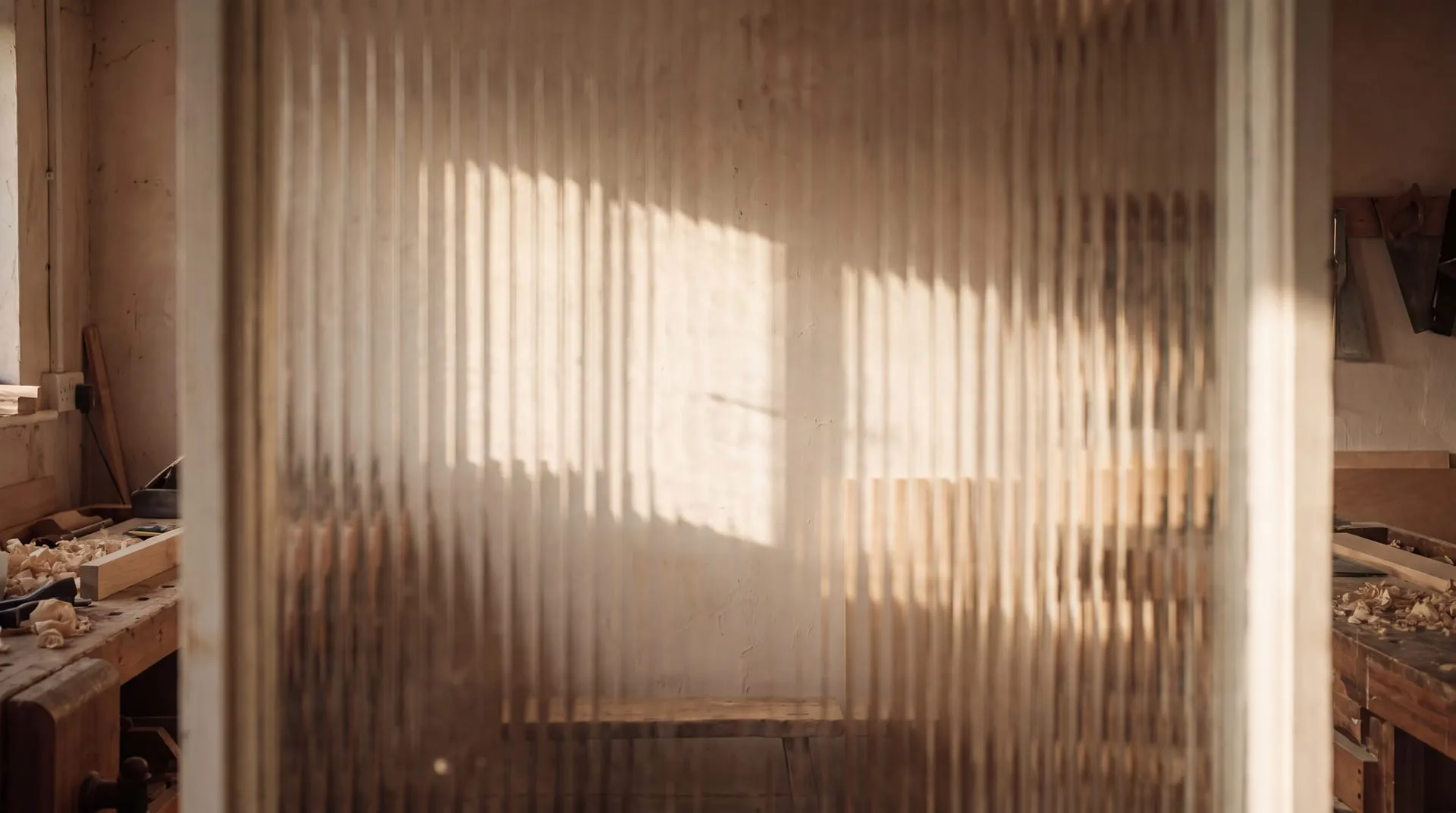
- Reeded: vertical fluting that distorts the view while keeping a period feel. Popular in Victorian and Edwardian houses, and a middle ground between clear and fully obscure.
Obscure glass is graded for how much it obscures, so a bathroom generally wants a higher grade than a study. Where privacy is the point, check the grade rather than ordering on the pattern name alone.
Common questions
Does a glazed internal door have to have safety glass?
Glazing in a door sits in what Approved Document K calls a critical location, so it must be safety glass or otherwise protected. In practice, glazed doors sold in the UK are supplied with toughened or laminated safety glass as standard.
What is BS EN 12600?
The pendulum impact test for flat glass. A weighted impactor is swung at the pane from set drop heights and the glass is classified by whether it resists the impact and, if it breaks, whether it breaks safely.
Is toughened glass the same as safety glass?
Toughened glass is one type of safety glass; laminated is the other. Both qualify when they meet the required impact classification. They fail differently: toughened breaks into small blunt granules, while laminated cracks but generally stays in the frame.
How can I tell if existing glass is safety glass?
Look for a permanent mark etched into a corner of the pane, naming the standard and the manufacturer. It is small and often hidden behind a bead. If there is no mark, do not assume the glass is safe.
Can you cut toughened glass to size?
No. Toughened glass has to be cut and worked before it is heat treated, so it is made to its final size. Cutting or drilling it afterwards will shatter it. Laminated glass can be cut by a glazier.
Ready to order?
Every door lists its sizes in both imperial and metric, so you can check yours against what you measured before you commit.